

Design the week before the move
Start with work location, school needs, healthcare, airport frequency, recreation and the people you expect to see. Then add the errands that seem too ordinary to matter. Those ordinary trips become the structure of life after the moving boxes are gone.
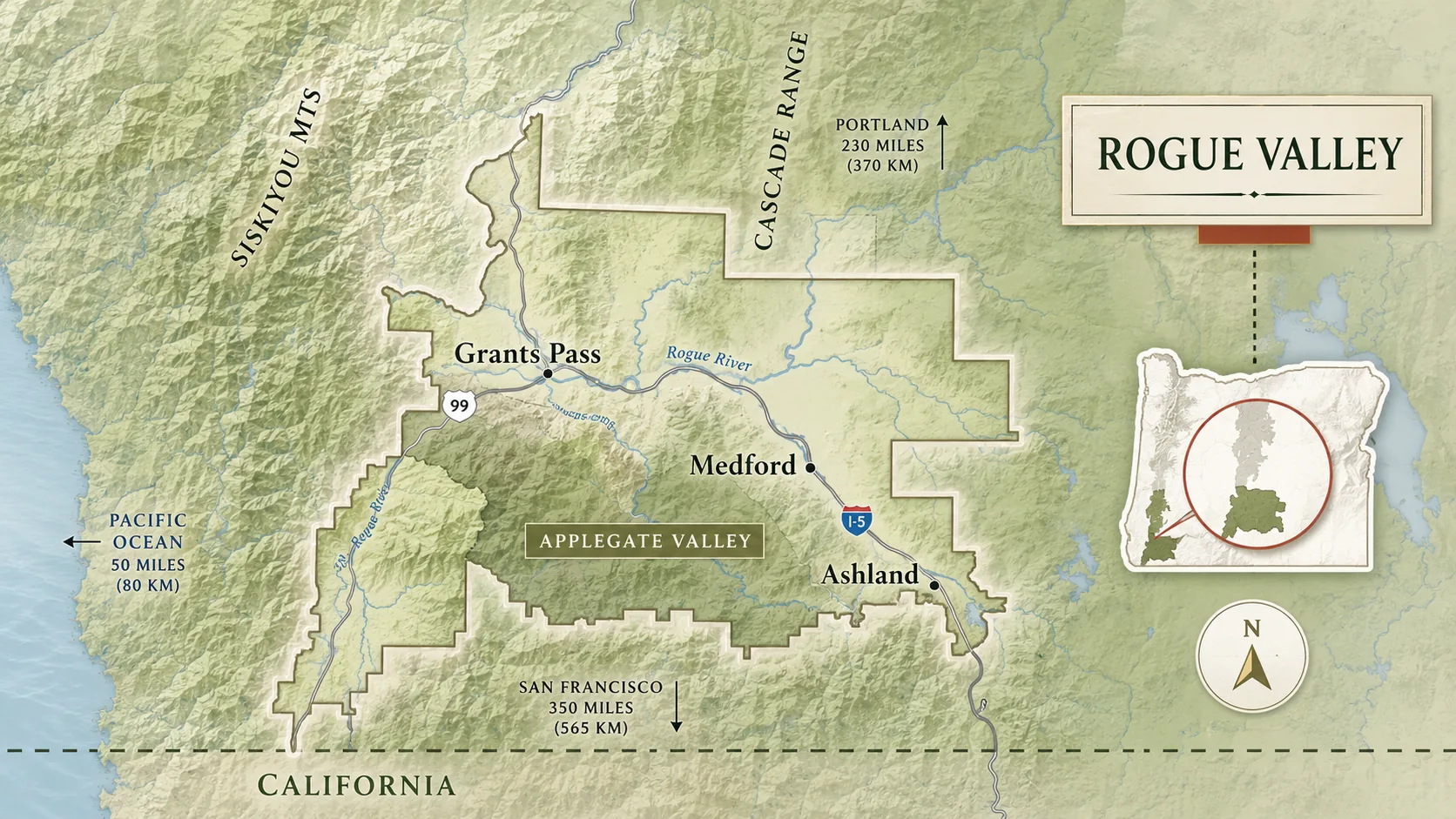
The Rogue Valley is compact enough to make many options feel close and varied enough that those options live differently. Your week is the best filter.
Define what close means to you
Ten miles can mean a quick freeway drive, a winding rural route or several trips through town. One person’s peaceful distance is another person’s daily inconvenience.
Write down how often you are willing to drive for groceries, medical care, a flight, dinner and a trail. Then test those routes from real neighborhoods—not from the center point on a map.
Choose the property system, not only the style
City utility connections, wells, septic systems, irrigation, slope, private roads, wildfire exposure and internet options can change how a property works. The house and the site are one purchase.
A relocation search gets safer when you name the systems you are comfortable managing. A beautiful rural setting is a lifestyle choice and an operations choice at the same time.
Build a two-town shortlist
Choose two towns that solve your week in different ways. Perhaps Ashland for a walkable center and Medford for access, or Central Point for convenience and Eagle Point for an eastern-valley setting.
Comparing two real alternatives teaches you more than browsing the whole region. Keep a third wildcard only if it tests a genuinely different life.
Let listings answer the final questions
Once the shortlist has context, open the live search. Hold the budget steady and compare condition, lot, commute and maintenance. The goal is to see what each version of life costs in the current market.
A listing portal is useful after you know what you are asking it to find. Before that, it is mostly an attractive way to collect confusion.
Real estate decisions are property-specific. Market conditions, financing, insurance, zoning, legal questions and inspection needs can change. Use this as a scouting framework, then verify the details that apply to the property and transaction.
Frequently asked questions
What towns are usually considered part of the Rogue Valley?
The term is used broadly. Skip's local search focuses on Ashland, Talent, Phoenix, Medford, Central Point, Jacksonville, Eagle Point, White City, Shady Cove, Gold Hill, Rogue River and Grants Pass.
Should I choose a town before I start looking at houses?
You do not need a final answer, but a two- or three-place shortlist keeps the search grounded in daily life instead of listing photos.
Can Skip help plan a relocation scouting trip?
Yes. The Rogue Valley guide includes town comparisons and lodging ideas, and the Skip quiz can give us the context needed to help you narrow the route.